My Journey to 10,000 Steps a Day

My Journey to 10,000 Steps a Day

The Why

I ran into an old friend of mine a few days ago. I hadn’t seen her in years, and we hugged each other in excitement. We began catching up with each other by sharing stories about the last time that we saw each other, and we also discussed a few other topics. Then she asked me what I’ve been up to lately. The first thing that came to mind for me was how I have been relentlessly taking care of myself over the past few years. So, my immediate response was “Oh, I’ve just been taking care of myself… you know…healing and trying to be as healthy as I possibly can,” (In my highest and best “Hey girl, How are you?” voice). I might have lied just a tiny bit. I didn’t tell the whole truth, because we were in a store shopping and I just didn’t feel comfortable holding her “hostage”, so to speak, to tell her all about my journey. Maybe she’ll read this one day, but perhaps not – either is okay. I am also a very private person, so my telling this story even now isn’t easy for me, but I’m hoping that it might be able to help someone else. The truth is, I am absolutely enamored with taking care of myself!

In November 2020, I became ill suddenly. I mysteriously dropped 30 lbs. in one month, at what equated to losing 1 to 1 and 1/2 lbs. per day. I cannot even begin to put into words how frightening this was for me (and my family).

I could barely walk, and I could not drive. I was hospitalized and still found myself visiting the emergency room many times thereafter. Each time, I was undergoing major testing and then being sent home with my physicians being baffled at what was going on with me. I say baffled because I had three specialists in three different specialties, in addition to my regular physician, all of whom were unable to identify a specific cause for what I was experiencing health wise. They were also unable to pinpoint why I was having an adverse reaction to the medication that they prescribed me. It was bad. It was so bad that none of the specialists or my physician believed what I was telling them about what I was experiencing. I suppose perhaps that my experience was so unusual that maybe they thought that I was not telling the truth. I don’t know. Still, I don’t want to say that I was being gaslit, but that is what was, in all actuality, what seemed to be occurring. This is going to sound ridiculously crazy, but I even received phone calls from hospital personnel who I had never been introduced to in person, who were desperately trying to convince me to “just take the medicine” despite the fact that it was causing me to have a serious adverse reaction.

I could not believe what was happening. Neither could my spouse as he listened to these calls with me while they were on speakerphone. This was a very frustrating time for me, especially having been raised by a mother who worked in medicine in a professional capacity all of her adult life, and taught me a lot about taking care of my health. I, myself, also once worked in the healthcare field for some time, so believe me when I say that I have nothing against healthcare or the medical field. The frustration that I felt led me to seriously consider what I would do if and when I got better. In fact, it became my sole motivation to get better. I knew, however, that once I healed, God willing, I was going to have to make changes in my life; mainly because I did not want to ever have to experience what I was experiencing at that time – ever again.

Fast forward to February 2021.  I began trying to walk as a way for me to take the initiative in my own health and well-being. I needed to get back into life, off the couch and out of the bed. I wasn’t my usual self. Every day was just a day in which I wondered if I would make it to the next one. I was just trying to focus on healing in private.

I stopped taking prescription medication, (because it made me feel worse than when I wasn’t taking it), changed physicians, and began seeing a holistic health practitioner and a holistic nutritionist on the side. It was a bit pricey, but that would end up being one of the best decisions and investments that I have ever made for myself, and in myself.

During that time I learned quite a bit about nutrition, herbs and spices, vitamins, minerals and I even learned ways to heal and care for my vagus nerve, sympathetic nervous system and parasympathetic nervous system. I was also already enrolled in yoga teacher training, but had to postpone my certification final because of my health at that time. Since I could barely walk, that also meant that I could not practice yoga asana either. Heck, there were moments that I could barely stand. Yet, there were aspects of yoga that I kept up with because they were the only things that I could do, (with regard to yoga), that helped me a great deal. Those things are meditation, mudras, chakra sound healing, ayurveda and pranayama. I credit my general knowledge of those aspects of yoga with being a formidable part of my wellness journey.

Please note that I am not advising anyone to utilize any of these same methods to help heal themselves because I am not a physician, nor am I providing medical advice.  I am just sharing what worked for me, and my personal story of healing because it is relative to my personal journey of why I started walking 10,000 steps a day. As a caveat, I would advise anyone who might be considering trying anything that I mention in this post to please consult with your physician before doing so.

Moreover, please note that there are many additional points and details about my condition, and the situation that I experienced that I have decided to leave out of this post, and not share here for reasons related to privacy. This is something that you should also take into consideration before trying anything in this post without consulting your physician.

Baby Steps

As wonderful as all of these healing modalities were for me, they are not in alignment with the topic of this blog post. What I really want to place my focus on, and share with you is the subject of walking. More specifically – my dedication to walking 10,000 steps a day as a daily routine, and how you can start a similar walking regimen like this of your own.

Walking is so underrated. It is an exercise that is low-impact, but good for your heart and circulation. It is a weight-bearing exercise that is also as good for your lungs, as it is for your heart. It can help to lower your blood pressure and high cholesterol levels, improve your balance and coordination, strengthen bones and muscles, reduce the risk of heart disease, stroke and high stress levels, help you lose weight and improve overall energy.

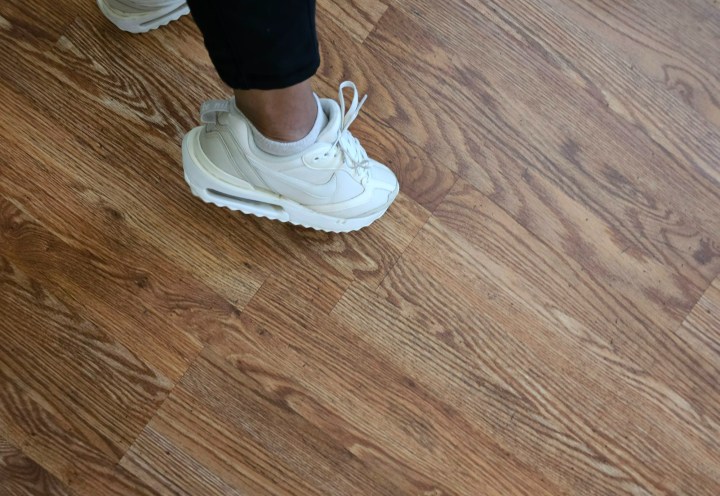
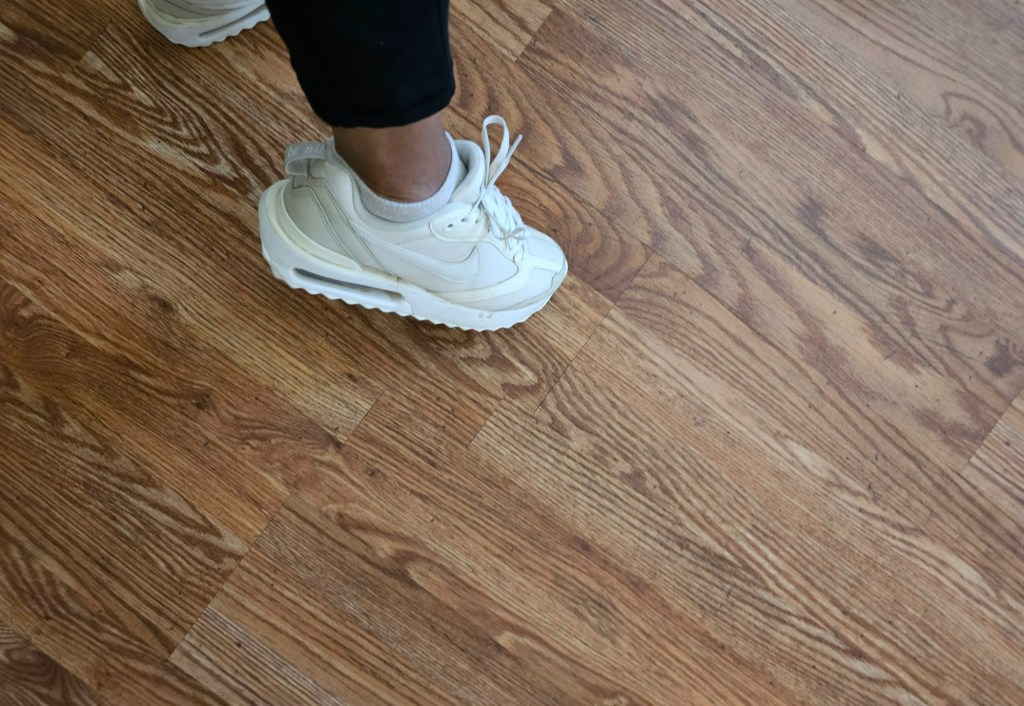
When I started my commitment to walking, I made a promise to myself to just walk at least 500 steps a day. It was hard for me at first because walking was very difficult for me to maintain without having my health condition flare up. However, I figured that I had nothing to lose, and everything to gain if I just pushed through it and began by taking baby steps.

Those 500 steps were some of the slowest steps that I have ever taken in my life, but lucky for me – I had nothing but time. It didn’t matter that my steps were slow. The only thing that mattered was that I was trying, and not sitting on my behind doing nothing but wasting away. I was determined to get back to my old self, or something even better.

After successfully achieving those 500 steps for a while, it would be two weeks later that I would begin my move to walking 1,000 steps a day. My steps continued to steadily increase each month – slowly, but surely. By March 2021 my average steps per day were up to 2,300, and by the end of summer that year I was walking 4,200 steps a day.

Today my steps per day average anywhere between 10,000 and 13,000 steps, depending upon how much time I am able to dedicate to my daily steps due to work or other tasks.

How You Can Implement A Similar Walking Practice Into Your Daily Schedule

Walking 10,000 steps a day can be quite challenging to achieve. Especially if you lead a busy life, or have a lot of other responsibilities. Making 10,000 steps a day a priority in your daily schedule takes a great deal of motivation and dedication – even a little bit of encouragement on some days – but I promise you that if you prioritize walking 10,000 steps a day, and put it in your calendar or to-do list, or better yet just make it a daily habit that you do before you start your day, after you eat dinner, or any other time that works with your schedule, and do it every day; you will find that it won’t be very long before it becomes a habit.

Try committing to it for 21 – 30 days to start. Then just keep it up. Personally, I am so used to getting my 10,000 steps in daily now because I started by making it a part of my daily morning routine right after brushing my teeth, washing my face, showering, getting dressed for the day, practicing yoga and eating breakfast. I have been doing this so long that it actually feels strange whenever I don’t start my day in this order.

You might be wondering if it is okay to take a day off from walking. My answer to that is a resounding, “Yes!” Breaks are very important if you are to sustain your 10,000 steps a day as a daily practice. It may also be good for your body to take a day off from walking. However, I have to admit that when first I started walking, I didn’t take any days off – but it was a lot easier for me to do that at that time since my daily step average back then hadn’t yet quite reached 10,000.

Nowadays, my body will let me know that walking 10,000 steps for 7 days straight deserves at least one day off, and my knees, calves, thighs and back usually appreciate it when I do take a break. However, there aren’t very many weeks in which I actually take a day off if I can help it. I will sometimes do somewhere between 1,500 – 5,000 steps in lieu of doing zero steps on my off days, unless I feel as though my body and mind really need the full break.

Another question that I often get asked is, “What do you do on days in which there is inclement weather?” Well, my response to that question is that I walk indoors. So, there is no excuse for me not to get my steps in. In instances when I am not able to walk outdoors, I will walk the whole perimeter of my home indoors, (Yes, you read that correctly, I will walk the whole perimeter of my home). This could also be done on a treadmill if you have one. Unfortunately for me, I gave mine to Good Will a couple of years ago, but as you can see, that hasn’t stopped me from my personal commitment to completing my daily steps. I really meant it when I said that I am enamored with taking care of myself.

It used to take me 5 hours or more to complete 10,000 steps a day. Now it takes me about 2 – 3 hours if I walk non-stop, but sometimes when I am pressed for time, and have work to do, I will break my walk into sections where I will complete the first 5,000 steps early in the day, and then finish the final 5,000 steps or more later the same day at a time when it’s more convenient for me. I just make sure to complete those final 5,000 steps before 11:59 pm. You can also try breaking the steps up into 3 parts or 4 parts even. I have found that breaking the steps down into more manageable step amounts can be really helpful in remaining dedicated to getting 10,000 steps in a day. If this is something that interests you then I highly recommend that you give it a try – after consulting your physician.

In Closing

So, as you can see making a commitment to walk 10,000 steps a day can be easy. All it takes is a little serious interest in wanting to complete 10,000 steps a day, and maybe, (as in my case), a great big wake-up call.

I am not saying that walking 10,000 steps a day cured me. What I can say for sure, however, is that it didn’t hurt me in any way and contributed to my feeling healthier than I have in decades.

Lastly, if you have any other tips for getting 10,000 steps in a day, or if you are starting your own 10,000 steps a day practice, I would love to hear from you. Please feel free to comment in the comments section or message me from the contact page.

Thank you for reading.

Until the next time…

Take care and be well.

Carol

Happy National Meditation Month!

Happy National Meditation Month!

Happy May and Happy National Meditation Month! As you may already know, National Meditation Month is celebrated during the month of May, and this is a great time to learn about meditation and its benefits. Moreover, if you’re so inclined, this might even be an optimal time to try meditation if you have never done so, join a meditation challenge, or even start a meditation practice.

Meditation, or Dhyana, (known as the 7th of the Eight Limbs of Ashtanga Yoga), is not as separate from yoga as we would believe it to be. Meditation is very much a part of yoga even though we tend to, in western culture, focus less on the whole concept of what yoga is; and instead place our focus only the asana part of yoga, which is the 3rd of the Eight Limbs of Yoga. In Patanjali’s Yoga Sutras, the first 5 limbs of yoga help one prepare for meditation practice; while the last 3 limbs consisting of Dharana, Dhyana and Samadhi make up the stages of meditation.

Meditation is beneficial in that it can help reduce stress, anxiety and depression. I can attest to this, somewhat, as it was an instrumental aid in helping me learn to deal with my grief. However, I can only speak for myself in this regard, and I am in no way claiming that meditation is a panacea for grief, but in my experience with meditation, I have found that it offers a sense of peace and provides greater clarity with regard to our purpose and being. I found that it helped me focus on the present, gently create space for what is to come in the future, while also enlightening me on all that there is to appreciate about the past.

Meditation can strengthen physical and mental health by helping to improve memory, foster better quality of sleep, lower resting blood pressure and resting heart rate. It can also increase creativity, self-awareness, patience and tolerance, help reduce negative emotions and increase the ability to focus on the present moment.

The benefits of meditation extend well beyond the end of your meditation practice. Especially when practiced consistently.

There are many types of meditation. Yet, most of us are more familiar with guided meditation, which involves listening to someone guide you throughout a meditation session, but there is also sound meditation, mindfulness meditation, walking or moving meditation, mantra meditation, transcendental meditation, body scan meditation and loving kindness meditation just to name a few.

Meditation is a practice that is found in many different cultures, but it is believed to have originated in India around 1500 B.C.E and in China around the 3rd and 6th Centuries B.C. It didn’t become popular in western culture until the 21st century.

Some believe that meditation is only for those who practice Buddhism or Hinduism, but that is a myth. Meditation may be practiced by anyone, as it is not a religion. Moreover, some have been known to choose to practice meditation by simply engaging in prayer, citing the rosary for example, or by reading sacred texts and poems, journaling, or simply reflecting on the meanings of what they have read.

So if you have been contemplating starting a meditation practice, there is no need to worry about it replacing your faith or religious or spiritual practice.

When thinking about the process of meditation, most of us tend to picture in our minds a lengthy process that involves sitting for a long period of time while trying to, at the same time, focus on clearing the mind, calming the body and thinking about whatever it is that we are supposed to be attempting to achieve while in a meditative state. This can be daunting for some because we live in a culture that celebrates “busyness” so much that many of us find it hard to slow down and sit with ourselves in silence – even for a just little while. But, the truth is meditation can be long, but – it doesn’t have to be. There are plenty of short meditation sessions, guided or otherwise available. Furthermore, if you decide to create your own meditation, you have the luxury of creating one that suit your specific time needs.

You should also know that it’s okay if you have trouble concentrating and remaining focused while meditating. There are many strategies to help you with this. One example would be to try placing your attention on both your intention, and the experience that you are having while meditating. Still, this can take some practice; in which case it is important to remember to be gentle with yourself through the process of learning how to become comfortable meditating – especially if while meditating – you begin to become aware of any discomfort or conscious or unconscious reluctance. It may also be helpful to know that being able to get to that place in your meditation practice is something that is, (in all honesty), something that is going to take some time to fully achieve as it tends to become easier through the process of extensive practice.

Although meditation can be practiced by anyone, there are some who should be cautious when it comes to meditating, such as those who may have experienced unresolved trauma and find it challenging to “go within.” Therefore, be sure to consult your physician, therapist or other medical professional to find out if meditation is something that you should be practicing.

The most important thing to remember when practicing meditation, (just as with practicing yoga), is that – you practice. As it is the consistent practice that is going to help you best yield its science – based benefits.

So, I am curious, what are your thoughts on meditation? Do you practice meditation? Have you been thinking about starting a meditation practice? Have you tried meditating and had a wonderful experience? Or have you tried meditation and discovered that it is just not for you? Please feel free to share your experience in the comments section.

For anyone who is interested in starting a meditation practice I will be sharing brief meditations on social media, Spotify and on this blog this summer, with longer meditation offerings in the form of classes on the Salubrity and Soul Yoga website later this year.

Also, I will be sharing more information on meditation throughout May, and if you follow me on Instagram, you know that yesterday I started a 31- day meditation challenge for National Meditation Month. If you have decided to join me on this months challenge I would love to learn about your experience with this meditation challenge so don’t forget to chime in by messaging me. Thank you for reading.

Until the next time…

I’m sending you light, I’m sending you love

and as always,

Take care and be well.

Salubrity and Soul…The redux

Salubrity and Soul…The redux

A ring of the doorbell in the middle of a warm summer’s night. A couple of songs playing on the radio, one after the other, on the way to the emergency room that now every time I hear again will forever take me back to that moment in time when I was hoping that all that I was experiencing was just a crazy bad dream. An unanswered prayer that I now have a greater understanding of and immense gratitude for. A dark night of the soul and a healing journey that led me back to my yoga practice after a long hiatus. A spiritual awakening. A promise kept and a divinely guided idea that I felt compelled to share. All – the birthing of Salubrity and Soul, the blog, and now Salubrity and Soul Yoga – coming soon.

Today I re-welcome you to Salubrity and Soul, the blog. Formerly a grief blog, but now a space where I sometimes share tidbits of my healing journey, perspectives on life, spirituality, gratitude, my love of nature, but mostly all things yoga, meditation, wellness and wellbeing related.

Salubrity and Soul celebrates the whole self – mind, body, heart, and soul and thriving within a wellness of being – mentally, physically, emotionally and spiritually.

Whether you are a veteran Salubrity and Soul reader or are new to this space I thank you for stopping by, and I appreciate you taking time out of your day to read my posts. My hope is that you find the content here helpful and as always I look forward to connecting, learning and sharing with you.

Also, before I end this post I would like to remind you that you can connect with me on Instagram at @salubrityandsoulyoga, and soon you will be able to also connect with me on Spotify on the Salubrity and Soul Yoga podcast where you can listen to content from this blog as well as find meditations, short yoga sessions, weekly affirmations and more while on the go or whenever you’re just short on time and don’t have time to read the blog. Thank you for reading.

Until the next time…

I’m sending you light, I’m sending you love

and as always

Take care and be well,

– Carol

You Can’t Always Get What You Want

You Can’t Always Get What You Want

Life is generally good, right? I think that most people would agree that life, even with it’s disappointments, is okay. In fact, more often than not, it can be pretty amazing.

Today might be filled with happiness, joy and excitement; while tomorrow “could” bring sadness or pain – and that’s okay. It’s okay because living isn’t about having everything work out for the best all of the time, as much as it’s about being able to make it through the rough times; and to do so with a healthy mind frame and not allowing our disappointments to define us.

We expect too much sometimes, I think. We also tend to become complacent in our ability to not let our egos get the best of us. It’s easy to believe that things will always be the way that they are – especially when things are going great. Of course, this may not be true for everyone.

Well, 2020 should have taught us a thing or two. It should have reminded us of our lack of control. The control that we tend to thing that we have, when truthfully any semblance of control that we thing we have is actually quite minor.

We should always be open to “other” possibilities. Why? Because that is what helps us transition better when thing do not go our way. At any time, even the healthiest person can suddenly become chronically ill. Or, that well-to-do friend of yours that you thought was so blessed and fortunate can suddenly lose everything. Or that job that you thought that you would retire with could suddenly go out of business.

When disappointments happen they can leave us feeling sad, angry or regretful that we couldn’t have done more to prevent whatever happened from happening. The key though is not to ruminate over disappointments when they occur. As difficult as that might be – just don’t do it. Please don’t do it, unless you’re looking for more disappointment.

We have to be willing to accept the life that we have been given, regardless of whether or not we approve of the outcome. You have to just keep moving forward.

Now, there may be disappointing situations that call for you to contest or dispute, because there are many things in life that we must fight for – but I am not talking about those type of disappointments. I am talking about the ones that we absolutely cannot control.

When life throws a little disappointment your way you don’t have to forget what happened, (you need to remember as that will be connected to your personal growth), but you do have to learn to accept life’s disappointments.

Once you learn to that, then you can conquer anything. When faced with something disappointing I like to remember the phrase “God doesn’t give us anything that we cannot handle.” It always helps me to keep things in perspective. So, if you’re experiencing something less than favorable and you feel that the sky has fallen – try remembering that phrase and see how that works for you. Also, stay strong, keep the faith and know in your heart and soul that all will be well in the end. All you have to do is learn to accept whatever is making you feel that way or, if you are able to change the situation – change it. All else is madness and who wants that?

Thank you for reading.

Until the next post.

Take care and be well.

Brighter Days Ahead

Brighter Days Ahead

Spring will arrive in less than 30 days. There is a special balance that occurs with regard to lightness and darkness during this time of the year. The time of year that we know as the spring equinox.

As we begin to gain more daylight, we still have periods of dark which can serve as a reminder that a time of growth and beauty is upon us; and that we can move forward from a period of stillness. It’s a time when the period of grounding that we endured during the winter comes to an end, and we begin leaning toward the sun and celebrating the newness and hopefulness of the spring season.

Thank you for reading.

Until the next post.

Take care and be well.

Blessings.

– Carol

Cauliflower + Lentil Tacos

Cauliflower + Lentil Tacos

Happy Wednesday!

This will be a very brief post. It’s a recipe for cauliflower and lentil tacos that I posted on Instagram in late September and have been meaning to share. This recipe is both vegan and ayurvedic. I hope that you enjoy this, easy to make, scrumptious “twist” on tacos as much as my husband and I did!

This recipe serves 1 – 2 people.


Grocery Shopping List

Pkg of 8 – 10 grain – free tortillas

1 head of cauliflower

1 cup of lentils

1 avocado

1 onion, yellow

1/2 tsp sea salt

2 tsp cumin

2 tsp chili powder

2 tsp garlic powder

4 tbsp avocado oil

1 tsp sumac

1 bulb of garlic, fresh

4 limes, fresh (or bottled lime juice if you prefer)

warm water

1/2 cup of tahini, unsweetened / unsalted

1 cucumber, small

1 bunch of cilantro, fresh

1 bunch of radishes


Main Ingredients / Preparation

  1. Cook the lentils.
  2. Chop cauliflower into florets.
  3. Mince the two garlic cloves.
  4. Slice the yellow onion in half and dice 1/2 of the yellow onion.
  5. Slice the avocado into wedges.
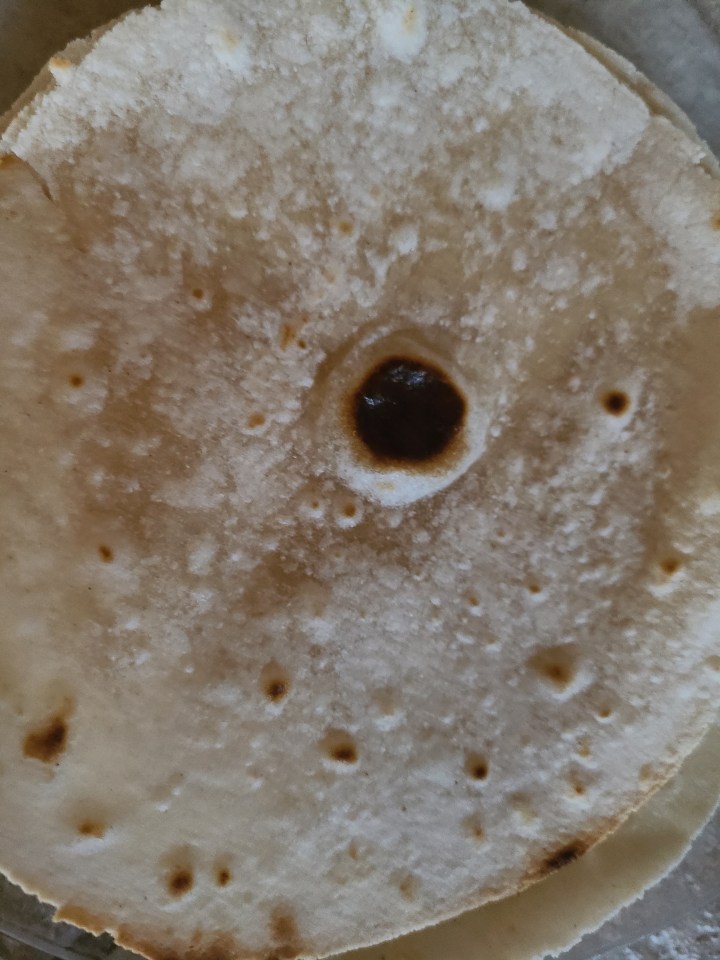
  6. Heat stove to medium setting, and using tongs warm both sides of tortillas. Keep tortillas warm until ready to assemble tacos.
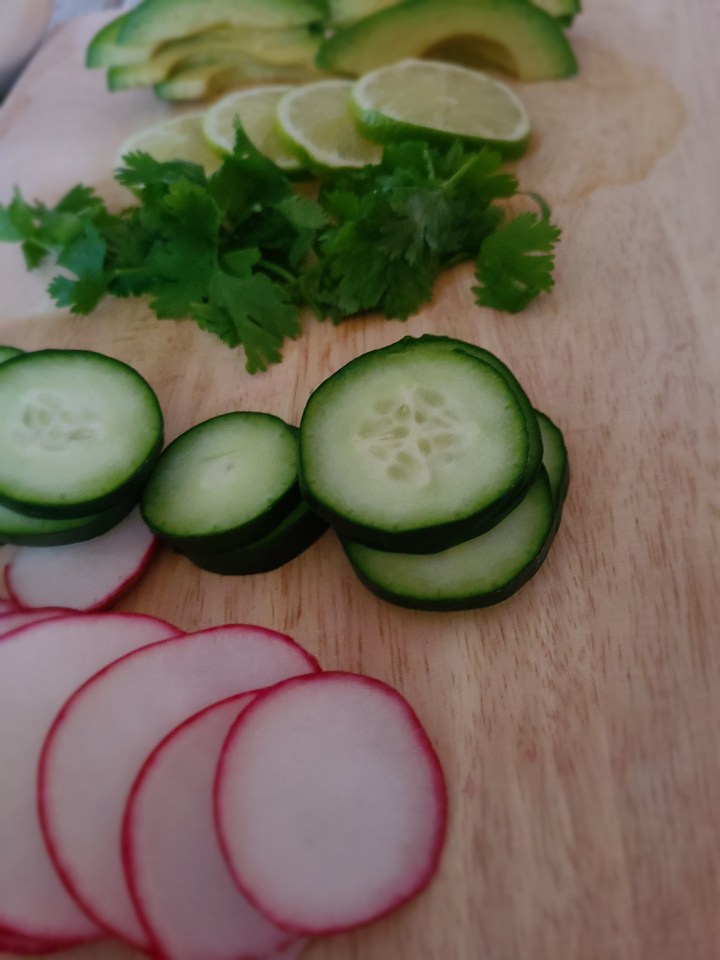
  7. Slice the cucumber.
  8. Slice radishes into thin slices.
  9. Chop the cilantro.

Sauce Ingredients / Preparation

  1. In a bowl mix tahini, sea salt, lime juice, warm water as follows:
  2. 1/2 cup of tahini
  3. 1/4 tsp sea salt
  4. 3 tbsp of lime juice
  5. 4 tbsp warm water
  6. Mix until the consistency becomes thickened and set aside to for later.

Topping Ingredients / Preparation

  1. Set aside the pre-sliced and pre-chopped cucumbers, radishes and cilantro.
  2. Use the remaining half of the avocado wedges from other half of avocado as topping or garnish with the cucumbers, radishes and cilantro if you wish.

Make it

Preheat oven to 450 degrees F.

Add 2 tbsp of avocado oil to a medium saucepan on medium heat, then add the onions and garlic. Saute until browned.

Add the cooked lentils to the onion and garlic mixture with 1 tsp cumin, 1 tsp chili powder, and 1/2 tsp sea salt.

Mix the cauliflower florets with 2 tbsp of avocado oil, 1 tsp chili powder, 1 tsp garlic powder, 1 tsp sumac, 1 tsp cumin, and 1/4 tsp sea salt – in a large bowl and toss until cauliflower florets are sufficiently covered with seasoning mixture.

Pour seasoned cauliflower florets onto a baking sheet and place in a single layer across baking sheet.

Allow cauliflower to roast until brown for approximately 30 minutes, then remove from oven.

Take warmed tortillas and fill each one with a spread of lentils, then add cauliflower florets and add avocado slices for added flavor and texture.

Top with the tahini sauce and a bit of cilantro.

Garnish with cucumber slices, radish slices and more avocado and cilantro per your preference.


Sending you love and light.

Until the next post…

Take care.

Happy National Yoga Awareness Month!

Happy National Yoga Awareness Month!

I’m excited this month because September is the anniversary month of my yoga journey. I am also excited because it is also National Yoga Awareness Month. National Yoga Awareness Month is an annual campaign that was created in 2008, by the Department of Health and Human Services that was designed to acknowledge and share the many health benefits of yoga.

During the month of September, there are often an abundance of offerings involving yoga related activities that can be found. As a result, it is a good time to find discounts and promotions on yoga classes, equipment, supplies, clothing, and the like.

Some of my favorite ways to celebrate National Yoga Awareness Month include:

  • Participating in a yoga challenge.
  • Trying a new style of yoga.
  • Making a commitment to your yoga practice.
  • Taking a yoga class. (Many of which, now, can be taken virtually).
  • Purchasing a new item to help you in your yoga practice.
  • Getting to know more about yoga by reading a book covering the topic of yoga.
  • Practicing an asana that you find challenging.
  • Sharing the benefits of yoga with others.
  • Taking or sharing photos of your yoga asana progress.
  • Strengthening the non-asana part of your yoga practice.
  • Practicing yoga with a friend.

For anyone looking to begin a healthier lifestyle that includes implementing a yoga practice, this is a great month to begin.

I hope that one or more of the ideas that I have presented help inspire you to try yoga, if you have never done so.

Or, perhaps assist you in finding ways to strengthen your yoga practice. Namaste.

Thank you for reading.

Until the next post…

Take Care.

25 Ways to Live a Holistic Lifestyle…(With a Focus on the Mind)

25 Ways to Live a Holistic Lifestyle…(With a Focus on the Mind)

Hello everyone! Now that we know that holistic living is more a way of living than just a way to curb illness, (and involves the mind, body and soul), I would like to talk about what holistic living looks like when it solely involves caring for the mind.

A few weeks ago I watched a news program that covered a story on how the rain forest in the Amazon is in danger because of the the excessive practice of burning and clearing away of necessary plant life for commercial purposes due to some of the effects of consumerism. It was quite an interesting program.

They mentioned how that problem has an affect on animal life as well, which was kind of sad, but it really got me thinking. If you’ve ever watched a documentary or read a credible article on the Amazon, you know that it is considered to be “the lungs” of our dear planet earth. Without that critical part of our planet’s whole, who knows what the health of Earth will be like in the years to come. A simple domino effect of problems can have an adverse effect on the “whole”of just about anything. It’s no different with our “selves” .

Whenever one aspect of our health is impacted, (positively or negatively), it can affect other parts of our health, (positively or negatively), too. Our emotions can lead us to develop headaches or stomach issues; or they can have an effect on how well we recover from surgery or illness.

So as you can probably guess, working towards keeping our minds as healthy as we work towards keeping our bodies healthy is a part of living a holistic lifestyle because, again, our mind, body and soul are interconnected.

Here are a few ways that you can apply holistic health to your mind health. This list is not exhaustive, but these are a few things that I have personally learned from holistic practitioners, tried, and deem effective:

  • 1. Practice meditation daily.
  • 2. Use affirmations
  • 3. Practice yoga daily.
  • 4. Think critically about everything.
  • 5. Practice healthy optimism and positivity.
  • 6. Avoid negative thinking.
  • 7. Practice gratitude daily.
  • 8. Develop personal boundaries and avoid toxic relationships / “energy vampires”.
  • 9. Challenge yourself often and release yourself from “comfort zones”.
  • 10. Journal regularly to express and release emotions, feelings and thoughts.
  • 11. Be careful with your thoughts and the things that you allow your mind to entertain.
  • 12. Develop a strategy, such as using a mantra, to redirect your mind from any triggers that might lead to negative thought patterns.
  • 13. Get out into nature and go for a walk to help clear your mind and strengthen mental well being.
  • 14. Try learning new things – often.
  • 15. Give your brains periods of rest by practicing mindfulness, meditation or listening to music.
  • 16. Don’t let your ego take over your being.
  • 17. Practice deep breathing or Pranayama .
  • 18. Practice “Earthing” .
  • 19. Give yourself natural vitamin D by practicing healthy sun gazing.
  • 20. Maintain only those relationships and friendships that foster positive mental health – and that feel good.
  • 21. Try a little aromatherapy every now and then.
  • 22. Detach from social media and technology regularly.
  • 23. Separate your personal life from your work life,
  • 24. Practice minimalism.
  • 25. Create a sacred space in your home – a special place where you can go to for solace and quiet time to find peace from the busyness of daily life.

I hope that this list helps you as much as it has helped me, and if you have any tips of your own with ideas on how to live holistically, (with a focus on the mind), I would love to hear them, so please feel free to share in the comments section below.

Thank you for reading.

Until the next post…

With light and love,

Take care.

What is Holistic Living?

When you think of holistic living, you may conjure up thoughts of consuming “green juice”, using herbs to heal ailments or improve nutrition, creating natural beauty products out of resources made in nature, or some form of complementary medicine such as acupuncture.

Although those things definitely fit into the scope of living holistically, they are a small part of what it means to live a holistic lifestyle.

Holistic living is a philosophy that requires an understanding that all parts of the body, or self, are interconnected and should be considered when taking care of one’s complete health and wellness.

Moreover, on a more basic and common level of understanding what it means to live holistically, it simply means living your life in balance with your mind, body, soul, (and I always like to include heart as well.)

There is no specific way to live holistically, but, one important aspect of doing so consists of living in tune with nature and using natural products, elements, and food, etc., keeping your thoughts and emotions as positively open and healthy as possible – and doing it all collectively as a way to heal or maintain health, wellness and well-being.

I hope this post gives you at least a hint or an idea of what it means to live a holistic lifestyle. Stay tuned for a few ideas on ways to live a holistic lifestyle.

Until the next post…

Thank you for reading.

Take care,

Carol

Affirmations

Affirmations

Have you ever tried using affirmations as a means of self-help or self-improvement?

An affirmation is a positive statement that is repeated or written until it is believed to have manifested. They are quite helpful in decreasing negative thoughts, and every time that an affirmation is recited it helps to strengthen positive thinking.

My first experience with affirmations was less than favorable to say the least. In fact, the first time that I tried them I was instantly unimpressed and convinced that they were ineffective.

It seems I somehow formed the conclusion that they were just some type of “woo-woo” new age thing that didn’t offer any real inspiration or serve a viable purpose, (not that there is anything wrong with new age concepts…) I am not judging here. At that time it just felt wrong.

I remember I didn’t like the way that saying them made me feel when I recited them. They always left me feeling as though I was sad, incomplete and somewhat pitiful. Which was quite the opposite of how they were supposed to make me feel. Affirmations are supposed to leave you with a sense of empowerment. Why wasn’t I feeling empowered?

I later learned that affirmations, just like anything else that is created for the purpose of self-development and personal growth, work best “if” the person is ready, willing and open to receiving what the self-help task being performed is attempting to help you accomplish. I think sometimes when it comes to self-help activities we often expect them to work in an instant – like magic – at least that was the belief that I had at that time in my life. That is often not the case though. It took me a long time to realize that. Now I say say affirmations daily and I appreciate the gift of mental and spiritual inspiration that they give me each day.

What I like the most about affirmations, is that they work very similarly to gratitude in that they are personal, and they remind you of the positive life affirming aspects of your life. Every affirmation, once spoken, wraps you in your own personal strength and power; and prepares you for a day in which you will be prepared to take on any obstacle. To me, they are like daily “mental rainbows’ that provide you with little shots of extra resilience while also filling your heart with self-compassion and joy.

An affirmation as simple as “I am feeling stronger today” can help provide you with that little bit of encouragement needed to perhaps… get out of bed and face the day ahead when you are in a bereaved state; or experiencing some other type of loss.

In addition, reciting an affirmation such as ” I am feeling stronger today” is considered to be a better affirmation to use than something very simplistic like: “I am strong” because it is more reality based, a little more in-depth and considered to be easier to accept – and therefore apply. This works well for me, but feel free to try this for yourself to see if it works for you.

Other examples would include the following:

  • Using the affirmation statement “I will be kind to myself today and apply patience through all things that I encounter, ” instead of using a statement such as “I have an abundance of patience.”
  • “It is okay for me to laugh sometimes because laugher is a soul’s expression of joy. Appropriate laughter helps me breathe positive energy into the universe”, Instead of ” I will remember to laugh to foster a sense of joy.”
  • “I am present in my life and open to receiving love and support and good energy from others”, instead of ” I am open to socializing, and trying new things.”
  • “I trust that my ability to create a new story, (or add to the one I already have), is strong when things go wrong in my life, and I repel all doubt of my ability to do so”, instead of ” I can and will beat any adversity.”

A few ways that affirmations are useful include the following:

  • They help you draw on your ability to be open and receive positive energy from source or the universe.
  • They allow you to focus on applying courage because instead of denouncing your fears, they help you climb over them.
  • They help you apply patience, because they help you remain honest about your abilities and intentions.
  • They help with resilience because they make it easier to keep showing up during tough times.
  • They help you maintain your sense of humor and your ability to smile, laugh, not take life too seriously.

If you haven’t already done so, try creating your own daily affirmations, or if you’ve tried and had a bad first experience like I did, why not give it another try and see if it adds value to your life this time around. You’ve got nothing to lose, only something to (hopefully) gain. I wish you luck. Love and light to you.

Thank you for reading!

Until the next post…

Take care + be well.